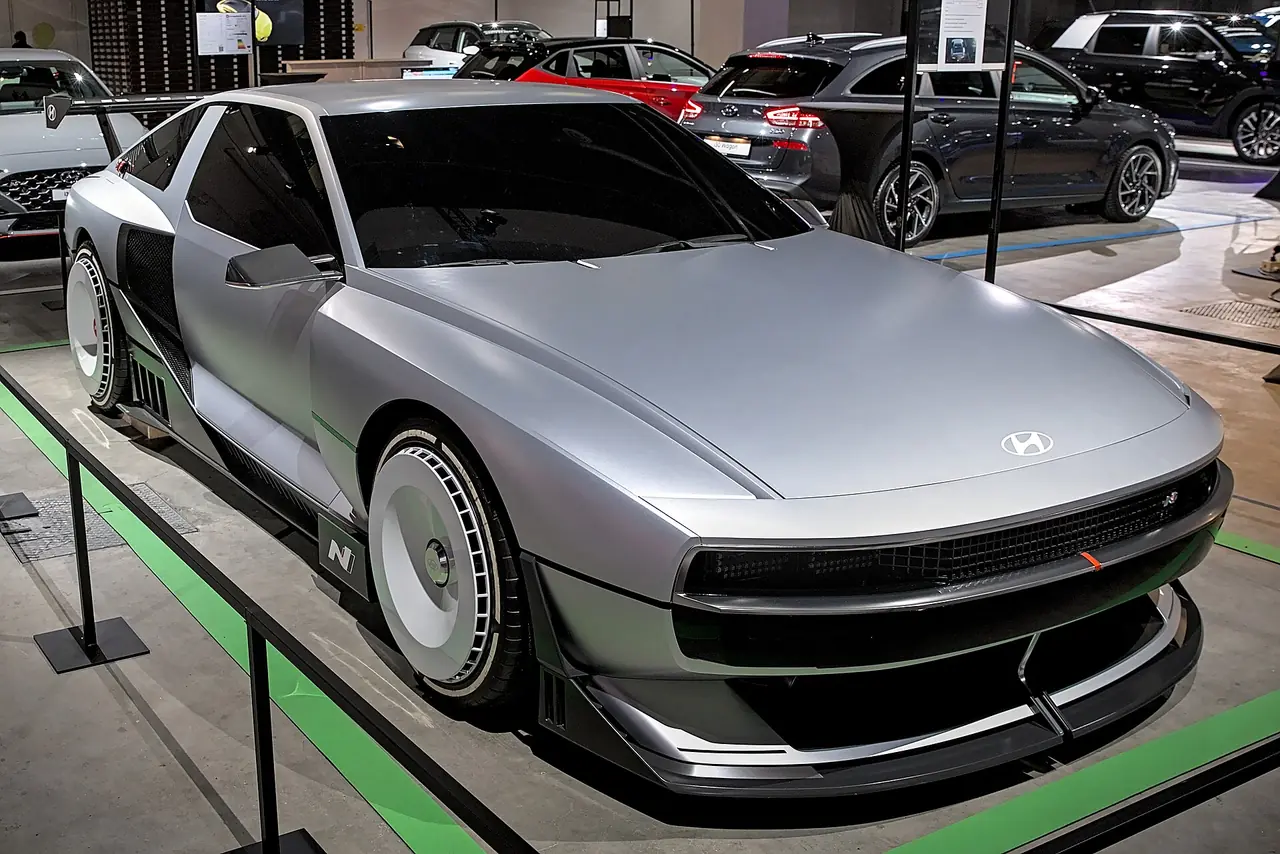
Nearly 430 hp, about $34,000, and a claimed weight around 3000 pounds are the three numbers that make the SSCC SC01 worth watching. The horsepower is the easy one to market. The weight is the one that explains the car.
Car and Driver reports that the Chinese electric sports car is claimed to deliver nearly 430 hp, cost roughly the same as a four-cylinder Ford Mustang, and weigh around 3000 pounds. Field Signal read: if those numbers survive production reality, the SC01 is interesting less because it is cheap speed and more because it treats mass as the enemy from the start.
That is the decision underneath the reveal. Most electric performance cars can produce violent acceleration because motors make torque cleanly and repeatedly. The harder work is building an EV that does not ask tire, brake, damper, and steering calibration to apologize for a huge battery and a tall mass budget. A 3000-pound target changes the whole engineering conversation.
The driver consequence is obvious. Less mass means less brake energy to manage, less tire load to mask, less suspension compromise, and a better chance that the steering and body control feel natural instead of simulated. It also usually means trade-offs: battery capacity, range, cabin space, acoustic isolation, crash structure cost, or all of the above. The SC01’s promise lives in that trade, not in a dyno number.
This is why the Hyundai N comparison matters. InsideEVs reports that the Ioniq 5 N and Ioniq 6 N share powertrain hardware, while software and chassis tuning make them feel different on track. That is a serious achievement, and it is exactly where modern EV performance is going: shared motors and electronics underneath, differentiated by thermal strategy, torque mapping, brake blending, stability logic, sound, shift simulation, damping, and tire choice.
But software-defined personality is most powerful when it is not being used as a cover-up. Hyundai N can make two related EVs feel different because the calibration work is deep. The SC01, if it really lands near 3000 pounds, attacks the other half of the job: make the physical object easier to tune in the first place.
That is the builder lesson. In an EV sports car, the bill of materials no longer tells the whole story. A motor output claim is quickly copied. A battery supplier can be shared. The durable product advantage is the loop between packaging, controls, tire data, thermal limits, and driver feedback. The teams that win will know which problems to solve with aluminum, which to solve with code, and which not to create at all.
There is also a rights and distribution angle for anyone dreaming of importing, modifying, or racing one. The value of a lightweight EV platform depends on access: diagnostic tools, calibration permissions, replacement battery modules, inverter support, brake-by-wire service procedures, and thermal data. A light chassis with locked software is still a closed box. A light chassis with readable data becomes a development platform.
That is the reason the SC01 is more than another fast Chinese EV headline. Nearly 430 hp is enough to make the poster. Around 3000 pounds is the tell. The sports-car part of an electric sports car is not the motor; it is the discipline to keep the rest of the machine from becoming a workaround.
The watch item now is not whether the SC01 can win a spec-sheet fight. It is whether production cars keep the claimed mass close, whether the battery and thermal system survive hard use, and whether the controls give drivers something better than straight-line theater. If SSCC gets that right, the SC01 will matter because it proves the first rule of EV performance is still the oldest sports-car rule: add lightness before adding excuses.
Why it matters
EV performance is becoming less about who can advertise the largest output number and more about who can control mass, heat, software, and tire load without numbing the car.
Builder angle
For builders and tuners, the SC01’s useful signal is platform access: weight, thermal headroom, calibration rights, diagnostic tools, and parts support will determine whether it becomes a real development canvas or just a locked fast appliance.
What to watch next
Watch whether production weight stays near the claimed 3000-pound figure, how large the battery pack is, what charging and thermal limits look like under track use, and whether SSCC allows meaningful service and calibration access.
Sources
- Car and Driver — This Chinese Electric Sports Car Has Nearly 430 HP and Costs About $34K Supports the SC01’s reported power, approximate price, and claimed weight.
- InsideEVs — These Hyundai N EVs Share Hardware. Software Makes Them Feel Different Supports the comparison that shared EV powertrain hardware can be differentiated through software and chassis tuning.