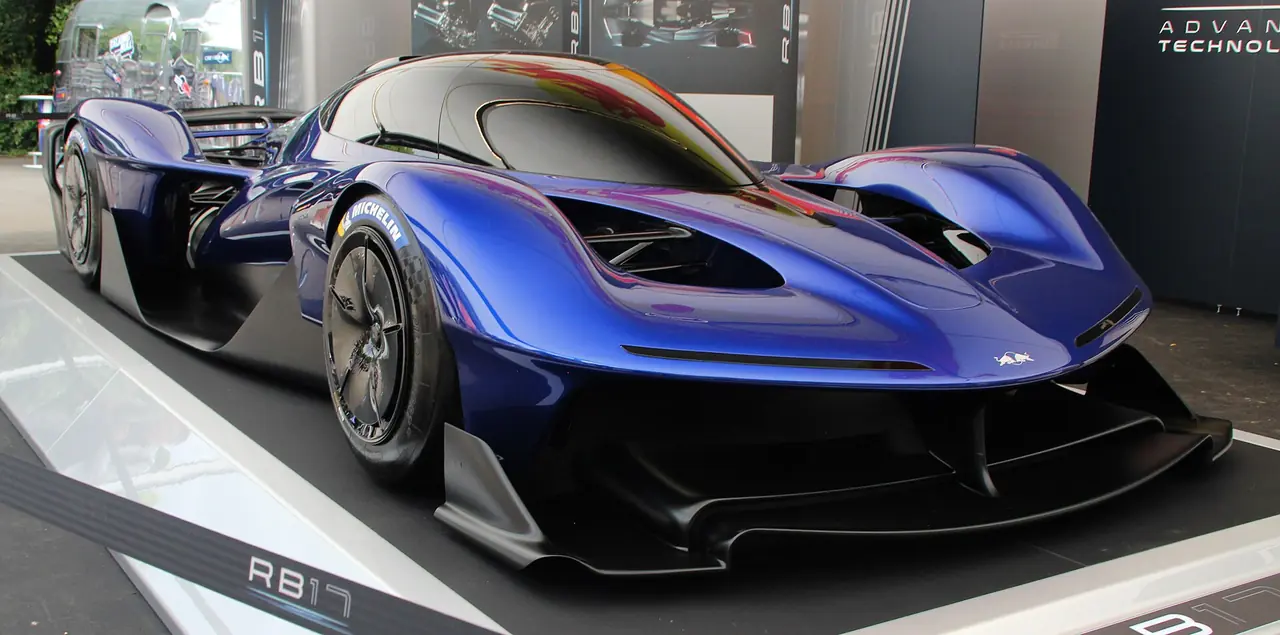
A V10 is the decision that explains the Red Bull RB17. Not the badge, not the carbon bodywork, not the inevitable aero theater. The tell is that Red Bull Advanced Technologies and Cosworth chose a ten-cylinder engine for Red Bull’s first hypercar, and Cosworth managing director Bruce Wood is now having to explain why that architecture mattered.
Reported fact: Motor1’s interview frames the RB17 around that exact question — why Red Bull’s first hypercar had to use a V10. Reported fact: RUF is building a 1,000-hp flat-8, an engine layout Porsche never put into production. Reported fact: Hennessey’s next hypercar, Project Overlord, is being teased as a high-revving, driver-focused “American Carrera GT” rather than another Venom F5-style top-speed weapon.
Field Signal read: these are not three random acts of piston romanticism. They point to the same product lesson. At the top of the enthusiast market, the engine is becoming the interface again.
That matters because the easy answer already exists. A low-volume hypercar builder can chase output with a turbocharged V8, a battery-assisted drivetrain, or an off-the-shelf performance module from a larger supplier. Those routes can make huge numbers. They can also make the car harder to distinguish once the initial press photos stop circulating. A V10, a flat-8, or a deliberately high-revving naturally aspirated-style brief is a different kind of asset: it gives the car a physical signature before anyone reads the spec table.
The driver feels that in the boring places first. Pedal mapping, rotational inertia, gear spacing, cooling demand, idle character, vibration, and service access all follow the engine decision. A V10 is not just ‘more exotic’ than a V8. It commits the whole car to a response curve and a sound profile that software can tune but not fully fake. It also creates costs: bespoke hardware, calibration time, packaging constraints, heat management, noise compliance, and a support burden that does not disappear after the Monterey reveal.
That is why the RB17 choice is more interesting than another horsepower announcement. Red Bull did not need an engine layout with history. It needed a layout that makes the car legible as a Red Bull-Cosworth machine when it passes once on a straight, when it downshifts into a braking zone, and when a buyer tells another buyer what it is. In low-volume performance, that is distribution. Sound travels faster than a configurator.
RUF’s flat-8 bet makes the same point from another angle. A 1,000-hp flat-8 is engineering theater only if the company cannot make it work. If it can, the layout becomes the story: a Porsche-adjacent specialist building the boxer engine Porsche never sold. Hennessey’s Project Overlord tease lands in the same lane by invoking the Carrera GT not as a top-speed benchmark, but as a shorthand for revs, immediacy, and fearlessness.
The lesson for builders is blunt: if your hypercar’s defining trait can be patched into a rival’s car later, it is not defining enough. Aero maps, drive modes, battery deployment strategies, and infotainment skins can be copied or iterated. A clean-sheet engine architecture is slower, riskier, and more expensive — which is exactly why it still has value.
The RB17’s V10 is not nostalgia. Nostalgia asks the past for permission. This is product strategy with a crankshaft: make the most expensive part of the car the part people can identify with their ears.
Why it matters
The hypercar fight is shifting from raw output to unmistakable mechanical identity. Red Bull’s V10 choice shows how low-volume performance brands can use engine architecture as a durable differentiator when horsepower alone has become easy to claim and hard to remember.
Builder angle
For a performance builder, the engine choice sets the entire workflow: packaging, cooling, calibration, service training, supplier risk, sound limits, and how the car is scouted by customers in the paddock. A bespoke V10 is expensive complexity, but it gives Red Bull and Cosworth a signature that software and badges cannot replicate.
What to watch next
Watch whether Project Overlord and RUF’s flat-8 stay focused on response and durability, or drift back into headline horsepower. The credible cars will show their work in cooling, serviceability, and repeatable track use — not just dyno numbers.
Sources
- Motor1 — Cosworth explains why Red Bull’s RB17 uses a V10 Primary source for the RB17 V10 decision and Bruce Wood interview framing.
- CarBuzz — RUF on building a 1,000-hp flat-8 Supports the broader point that specialist performance brands are using unusual engine architecture as identity.
- Carscoops — Hennessey Project Overlord teaser Context for another low-volume hypercar being positioned around high-revving driver character rather than top-speed chasing.